|

|
FREE Radon Test Kits for Bergen County Residents - March 2022 (PDF) Veolia Notice about 2026 Tank Painting at End of Anderson Avenue . . New Jersey Clean Water
. .
Pascack Valley Meals on Wheels
. .
See below message from Veolia Concerning their Getting the Lead Out Program
To ensure customers enjoy safe water and reliable service, Veolia will be canvassing neighborhoods in Alpine to check homes for lead service lines.
This is an important step in our commitment to protect customers by removing all lead and galvanized service lines from the system. If your pipe is lead or galvanized, we will replace it at no cost to you.
Since 2019, Veolia has removed more than 13,000 lead service lines in New Jersey as part of an aggressive $169 million project to Get the Lead Out.
You may see our technicians knocking on doors in your neighborhood. Our employees wear Veolia-branded hard hats, drive branded vehicles and will have identification that verifies they work for the company. Records for some homes in the area do not provide complete details about the material in the water service line. Our technicians may need access to the water meter inside these homes to determine if the pipe is made of copper, plastic, lead or some other material. If you would like to see our records for your property, go to
https://vnagis.maps.arcgis.com/apps/webappviewer/index.html?id=e5c42a93b20a4a37baa1be4719c7ee13
If you have any questions, please call customer service at 1-800-422-5987. Thank you for helping us safeguard your water quality for generations to come.
Orange & Rockland Weather Advisory
How to Report an Outage
If you experience a power outage, don’t assume that O&R automatically knows about it. You can report it and check to see when your lights will be back on by:
How Restoration Works Once it is safe to assess storm damage and begin service restoration, O&R crews will give priority to making repairs that clear major community roads – work that also restores power to a sizable number of neighboring customers. At the same time, crews will restore power to critical and emergency facilities (police and fire stations, and hospitals, for example). Then, crews will focus on getting power back on to those locations that will return electricity to the most customers quickly. Crews then will work their way down to restore smaller outages and individual customer’s outages. The following video describes the typical storm repair and power restoration process: https://youtu.be/JeGU8ID4_m0
Be Safe
O&R urges its customers to stay clear of downed electric wires. Don’t go near any downed wire. Assume it is energized and dangerous. Call O&R immediately toll-free at 1-877-434-4100. If the situation requires urgent action, call your local police to divert traffic until an O&R crew arrives.
Important Safety Tips
In addition, O&R personnel have been instructed to ensure all safety protocols when responding to emergency calls to keep everyone safe from the coronavirus. O&R asks members of the public to maintain appropriate social distance when they encounter O&R employees working in the field, to provide for mutual safety.
CLICK HERE To Report & Track Service Issues
Optimum/ Altice Weather Advisory To report internet, TV or phone service outages, customers can visit My Account for service updates. Customers can sign up to receive service alerts via text or voice message, restoration timing and other updates. They can also:
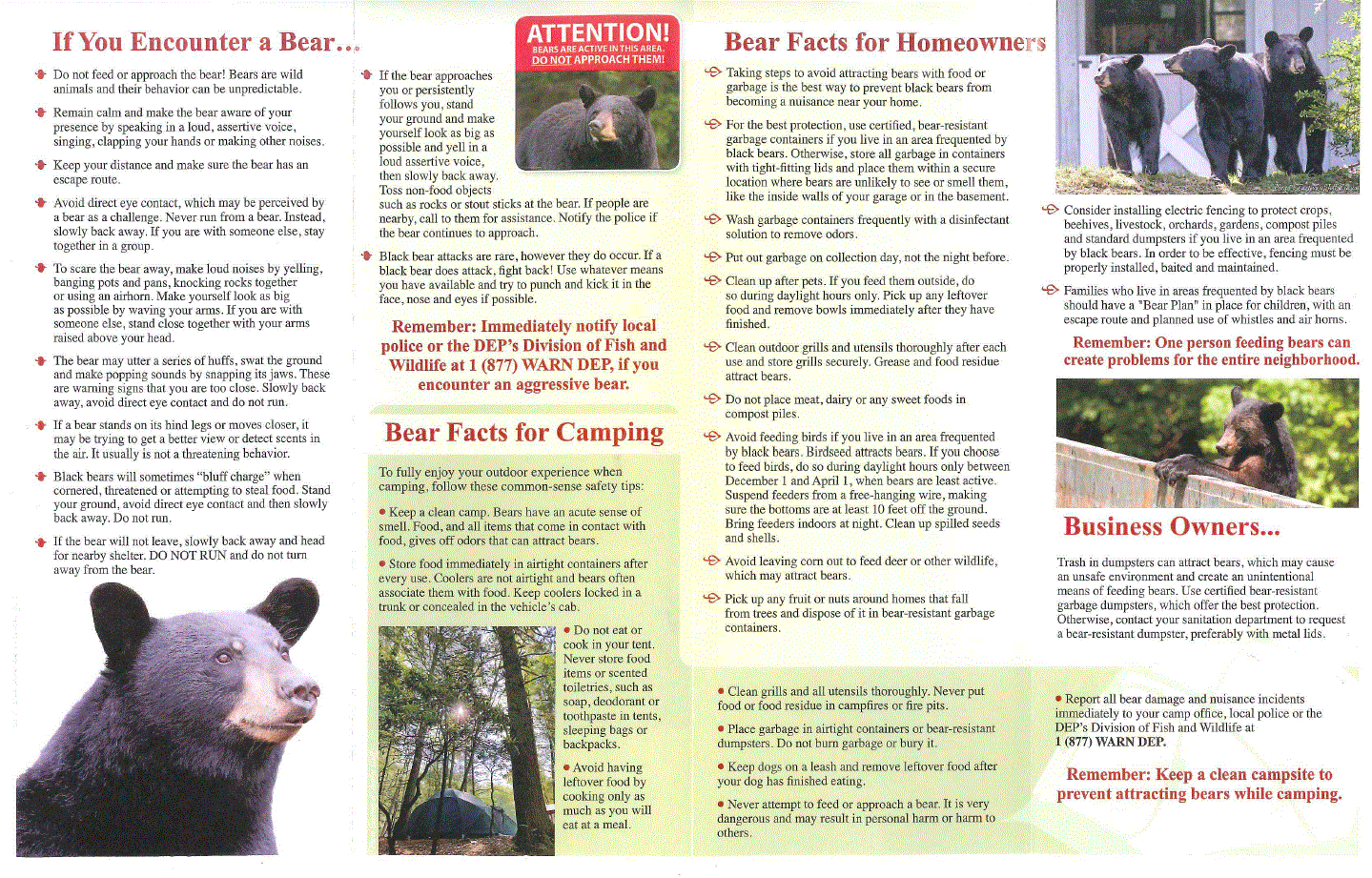
. Tenafly / Alpine Chemical Awareness Prevention The Tenafly Chemical Awareness Prevention (CAP) Website . . . Please Follow Precautions with Wildlife .
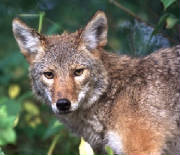
Coyotes are now common in this state ~ there are more than 3,000 living in New Jersey and have been sighted in 390 of the state's 566 municipalities. All sightings should be reported to the Alpine Police Department so that this information can be compiled and provided to the New Jersey Department of Fish & Wildlife. According to the New Jersey Division of Fish & Wildlife, the following additional steps should be followed: 1- Never feed a coyote. Feeding coyotes puts pets and other residents in the neighborhood at risk. 2- Feeding cats outdoors can attract coyotes. The coyotes feed on the pet food and also prey on the cats. 3- Put garbage in tightly closed containers that cannot be tipped over. 4- Remove sources of water, especially in dry weather. 5- Bring pets in at night. 6- Put away bird feeders at night to avoid attracting rodents and other coyote prey. 7- Pick up fallen fruit and cover compost piles. 8- Parents should monitor their children, even in familiar surroundings, such as back yards. 9- Install motion-sensitive lighting around the house. 10- Clear brush and dense weeds from around dwellings to reduce protective cover for coyotes. If you observe coyotes in the daytime that show no fear of humans or if a coyote attacks a person, immediately contact your local police and the Division of Fish and Wildlife at 908-735-8793; outside of normal business hours call the DEP Hotline at 877-WARN-DEP.
For more information, please click on the following link sponsored by the NJ Department of Environmental Protection Division of Fish & Wildlife NJDEP Division of Fish & Wildlife - Coyotes in New Jersey
. . . .
Notice to Snow Removal Contractors
- Pursuant to Borough Code 192-25; "No person, firm corporation,
owner of property, employee, agent, contractor or other persons at any time shall place or plow snow or ice upon a public
street or thoroughfare within the Borough from which snow has been plowed or removed by the Borough's snow removal equipment
or personnel. Any violation of this provision shall be deemed to create a hazardous condition. Any person violating
the provisions hereof shall be issued a summons." Borough Ordinance 192:25-27; Snow Removal Thank you for your cooperation |
|||||||||||||||||||||||





100 Church Street
PO Box 1095
Alpine, New Jersey 07620-1095
Tel 201-784-2900
Fax 201-784-1407